

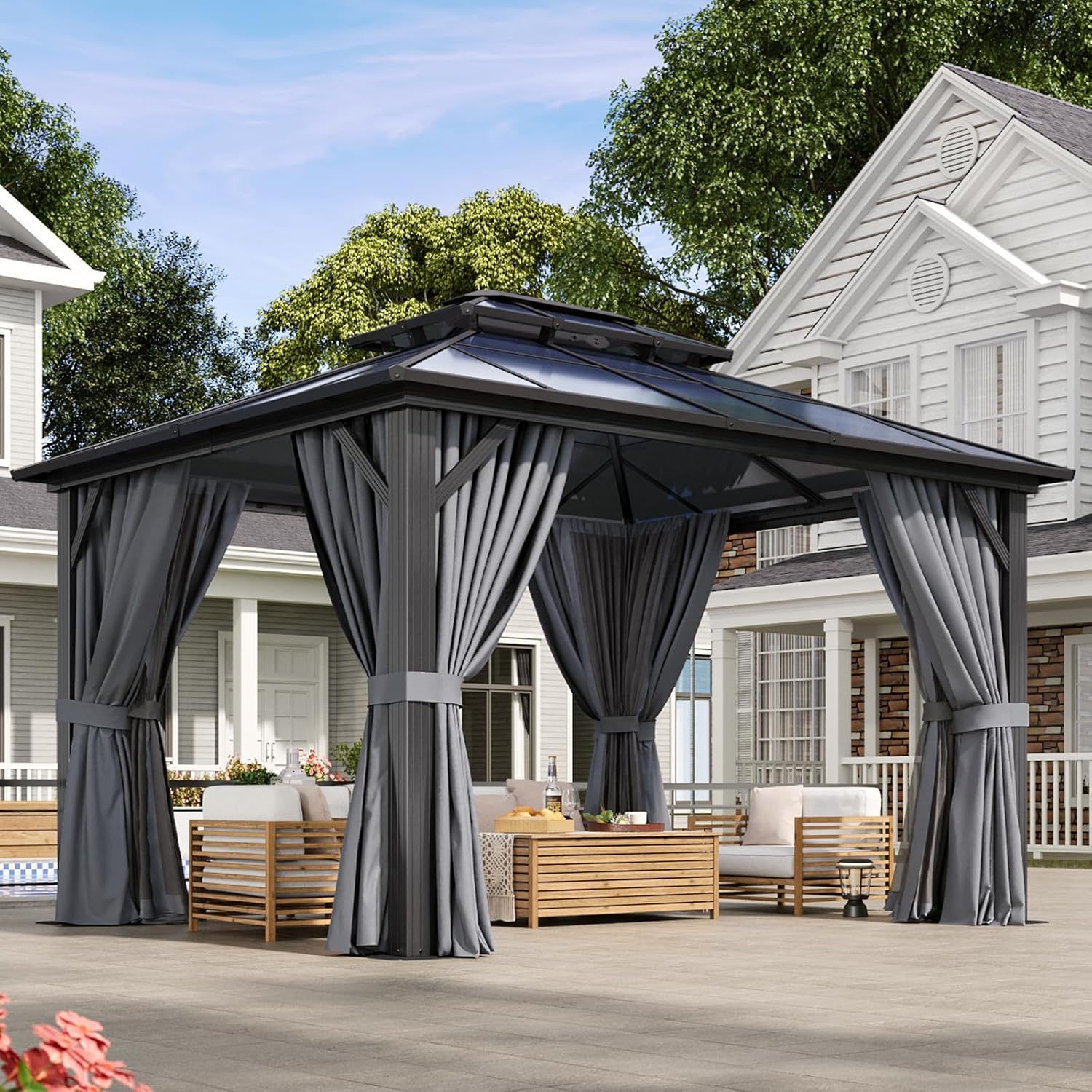
A gazebo and a pergola both define an outdoor room, but they do different jobs. The simplest distinction is the roof: a gazebo has a solid or fabric roof that keeps sun and rain off, while a traditional pergola has an open roof of beams or slats that filters sun and lets rain through. Online listings blur the line, so this guide also covers the hybrids you will see.
At a glance
| Factor | Gazebo | Traditional pergola |
|---|---|---|
| Roof | Solid (metal, polycarbonate) or fabric | Open beams, slats, or lattice |
| Shade | Full or near-full | Partial, moves with the sun |
| Rain protection | Yes | No, unless a cover is added |
| Snow and wind | Roof must handle loads; anchoring matters | Less roof load, but still needs anchoring |
| Look | A distinct roofed structure | Open, often with climbing plants |
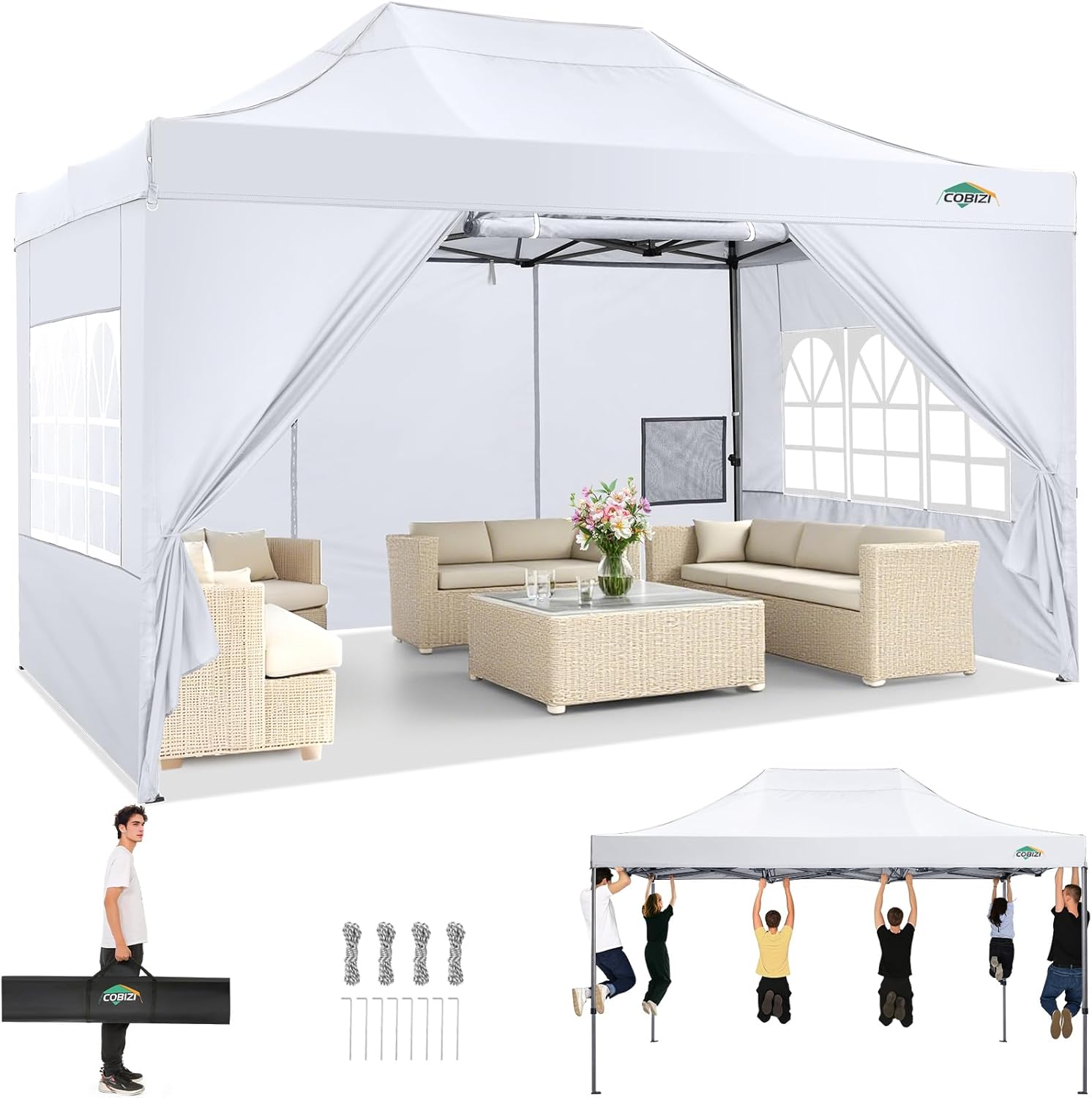
| Typical kit | Complete with roof, curtains, netting | Frame only, or with a sliding shade |
When a gazebo makes more sense
- You want to sit outside during light rain or keep furniture dry.
- You want full shade at midday.
- You want curtains and mosquito netting to enclose the space. About 300 listings in our catalog mention screens or netting in the title.
When a pergola makes more sense
- You want dappled light rather than full shade.
- You like the idea of vines or climbing plants overhead.
- You want a lighter visual presence that does not block views or house windows.
The hybrids: “hardtop pergolas” and lean-tos
Many products on Amazon combine both words. In our catalog, sellers use “pergola” for several structures that actually have solid roofs, for example Aoxun’s “Lean to Gazebo Pergola with Sloping Roof,” Breezestival’s “Lean to Gazebo Pergola” with a polycarbonate hardtop, and ALAULM’s “Outdoor Hardtop Pergola.” Functionally, these behave like gazebos: they block rain, carry snow, and catch wind like a solid roof. Judge the product by its roof, not the name in the title.
The lean-to format is also common. It uses a single sloped roof and is either attached to a house wall or freestanding with its own back posts. Wall-mounted versions depend on the wall as part of the structure: Pamapic, for example, recommends “mounting the gazebo to your wall and floor using heavy-duty expansion bolts.”
Installation and permits
Both need a level base and proper anchoring. Pergolas with open roofs catch less wind than solid roofs, but a pergola fitted with a solid cover or retractable shade behaves more like a gazebo in wind. Either structure can require a permit depending on size, height, and whether it attaches to the house. Attached structures, in particular, often face more scrutiny. Check with your building department and HOA before buying; see Where to Put a Gazebo.
Cost and upkeep
Prices overlap heavily, so compare specific products rather than categories. Upkeep depends mostly on materials: wood needs sealing, steel needs rust touch-ups, fabric covers need replacing, and aluminum needs the least. See Gazebo Care by Season.
Who should choose which
Choose a gazebo if weather protection is the point: rain, midday sun, bugs, or year-round use. Choose a pergola if the goal is style, partial shade, and plants, and you are happy to go indoors when it rains. Skip both if you cannot anchor properly on your surface, since any structure with a roof or cover needs it.
Next steps
Browse full-roof options in Best Hardtop Gazebos and Best Soft Top Gazebos. Want netting for bug season? See Best Hardtop Gazebos with Netting.
How we put this guide together
Product naming examples are taken from listing titles in our catalog of 724 gazebo and canopy products (September 2026). Definitions follow common usage; manufacturers do not use the terms consistently.





Write Your Review
No reviews yet. Be the first to share your experience!