

A freestanding gazebo stands on its own four or more posts anywhere in the yard. A wall-mounted gazebo, often called a lean-to, attaches on one side to your house and slopes its roof away from the wall. This freestanding vs wall-mounted gazebo guide explains how that changes installation, drainage, and how you use the space.
At a glance
| Factor | Freestanding gazebo | Wall-mounted (lean-to) gazebo |
|---|---|---|
| Placement | Anywhere with a level base | Against a structurally sound exterior wall |
| Roof | Pitched or hip roof, often double-tier | Single slope away from the house |
| Posts | Four or more | Usually two at the outer edge |
| Anchoring | Ground or slab only | Wall and ground; both matter |
| Drainage | Off all sides or through posts | Toward the yard, often with a front gutter |
| Best use | Destination seating, hot tubs, dining | Covered patio, back door, grilling area |
| Permits | May be required | More likely to need review, since it attaches to the house |
How you will use the space
A freestanding gazebo creates a separate destination, which suits a hot tub, a dining area away from the house, or a spot with a view. A lean-to extends the house instead. Domi pitches its 12×16 lean-to as a way to “extend your private space,” and AECOJOY notes that “unlike a traditional freestanding gazebo,” its product “attaches to the wall.” Because there are no posts against the house, a lean-to often fits a narrow patio better.
Installation and anchoring
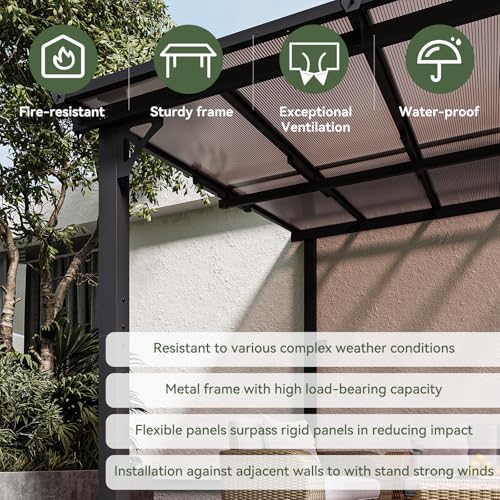
This is the biggest difference. A lean-to depends on the wall it is attached to. Manufacturers are clear that the wall connection is part of the rating: Aoxun says one 20×10 model resists weather “as long as it is wall-mounted with expansion bolts,” Pamapic recommends “firmly anchoring the gazebo to both your wall and ground surface,” and AECOJOY gives its 40 to 50 mph wind figure only once the gazebo is “securely fastened to both the wall and ground.” Follow the manual exactly, and attach only to a wall that can carry the load. If your exterior is vinyl siding, brick veneer, or stucco over framing, have a contractor confirm where and how to fasten. A freestanding gazebo needs only a level base and the specified ground anchors; see How to Anchor a Hardtop Gazebo.
Drainage and the house wall
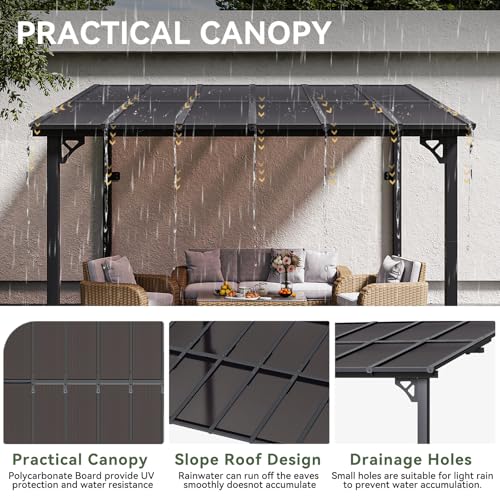
A lean-to roof slopes away from the house, so rain runs to the yard side. Covered Outdoor and others add a built-in front gutter. Pay attention to the joint where the roof meets the wall: water running down the wall can reach the gap, so follow any flashing or sealing guidance in the manual. A freestanding gazebo sheds water on all sides, which does not touch your house at all.
Weather claims
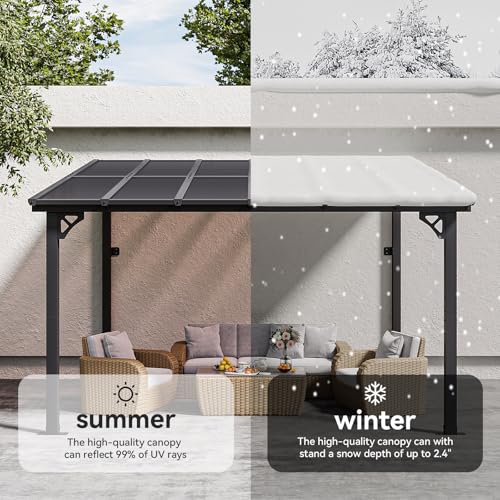
Stated figures for both types depend on anchoring. Domi lists a snow load of 35 pounds per square foot and wind up to 60 mph for a wall-mounted sunroom, while Aoxun lists 31 to 38 mph for some lean-to models. Freestanding steel-roof hardtops commonly state about 60 mph. Compare the specific model, not the category. More in Gazebo Wind Ratings Explained.
Permits and HOA rules
Any permanent structure may need a permit, and one attached to your house is more likely to be reviewed. Local codes and HOA rules vary widely, so check before you buy, not after.
Choose freestanding if
- You want a separate outdoor room away from the house.
- You do not want to drill into your exterior wall.
- You may want to move the structure later.
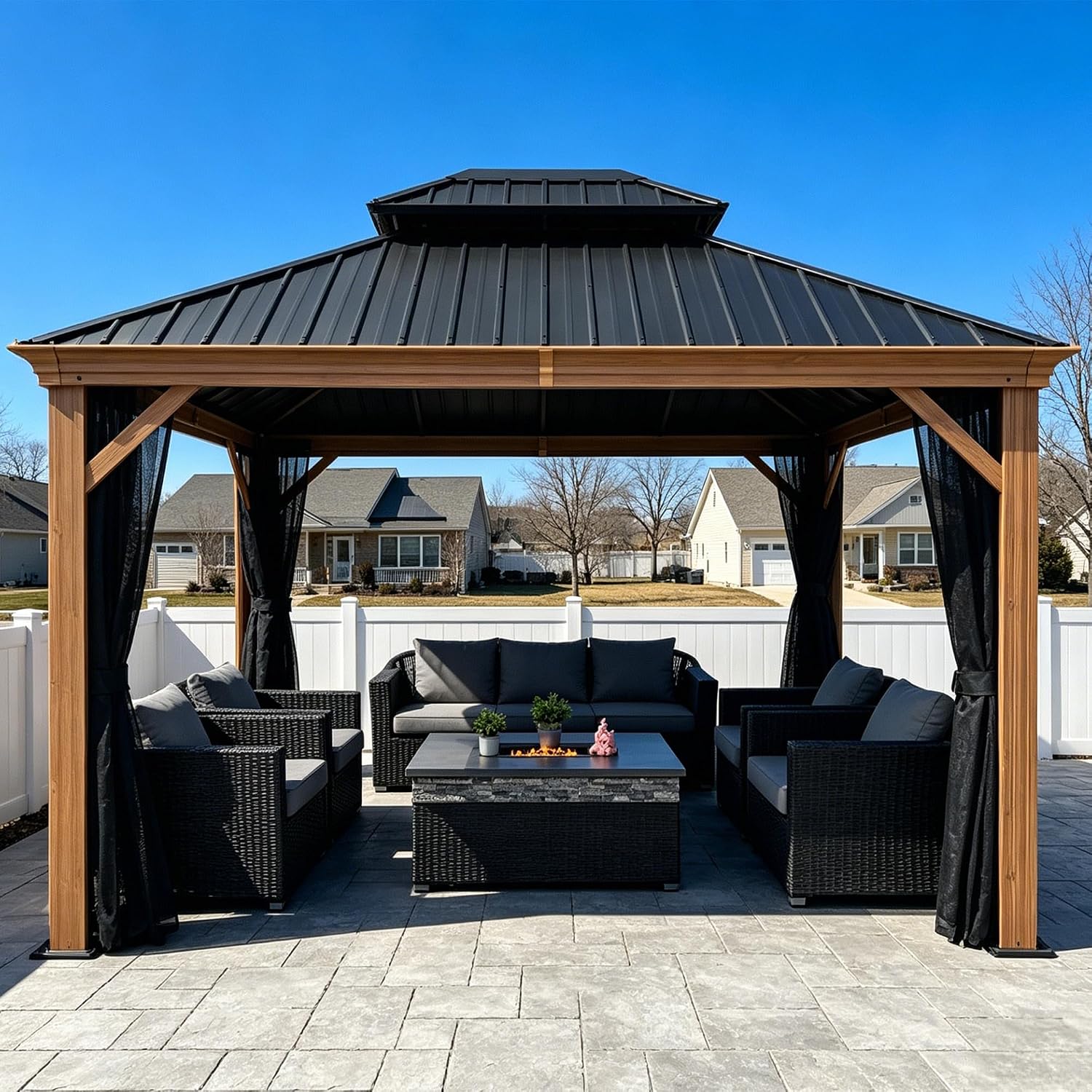
Freestanding hardtops to compare:

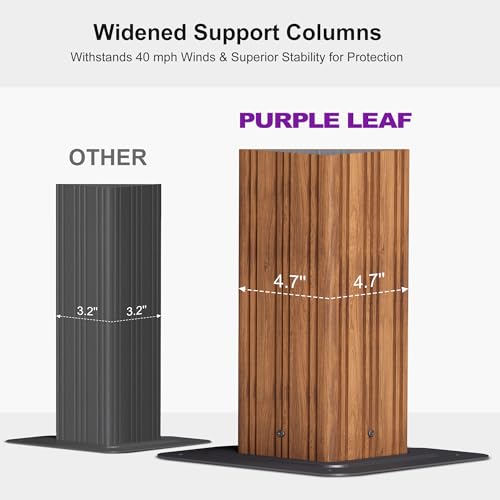
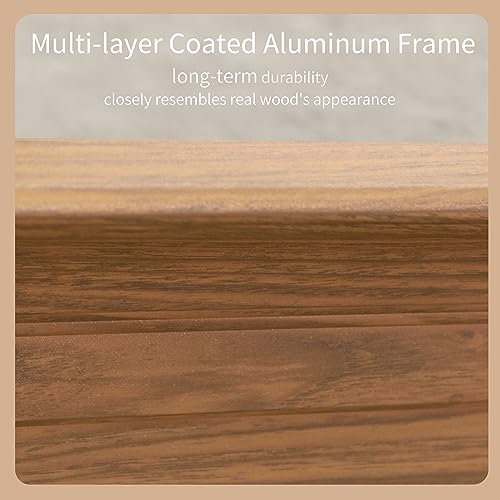
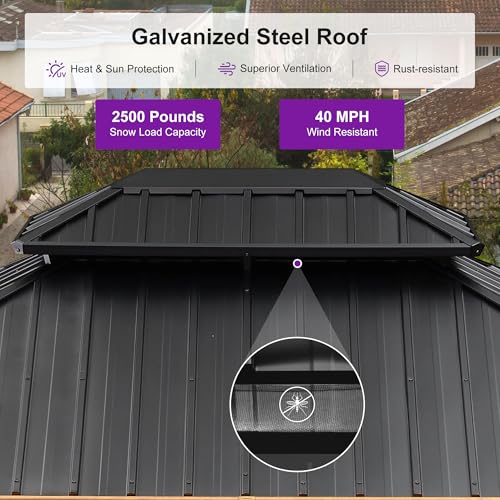
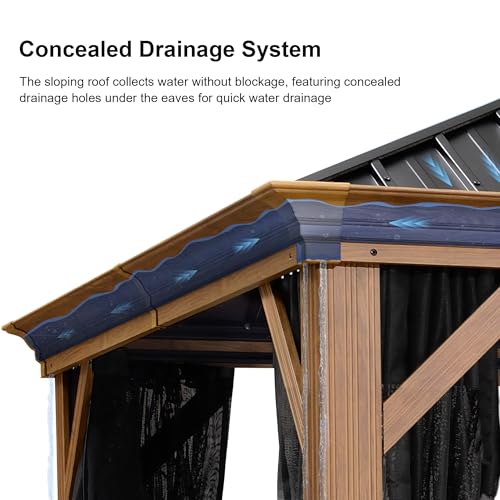
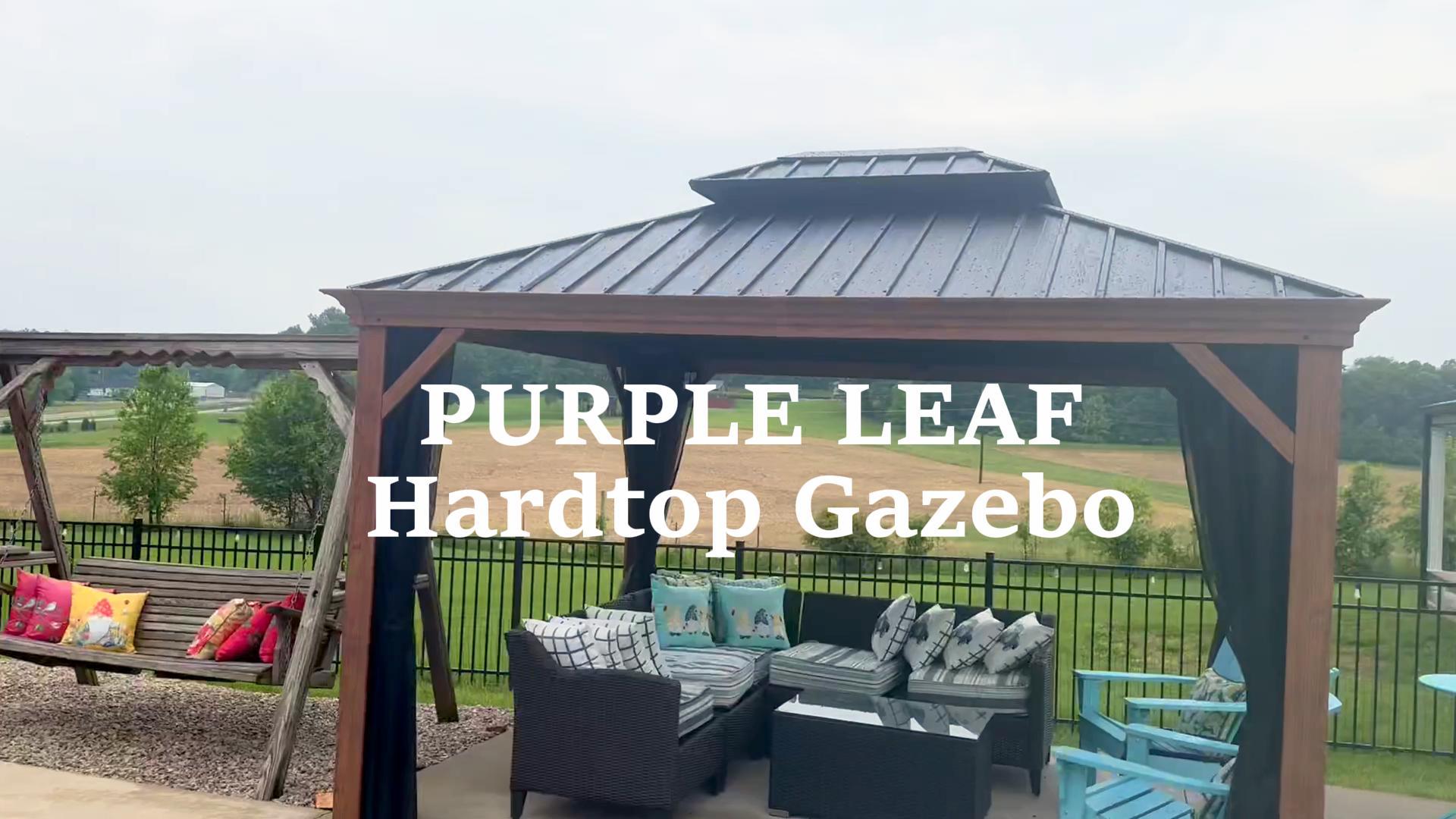
PURPLE LEAF 10x12 Hardtop Gazebo with Drainage


As an Amazon Associate we earn from qualifying purchases. Product prices and availability are accurate as of the date/time indicated.

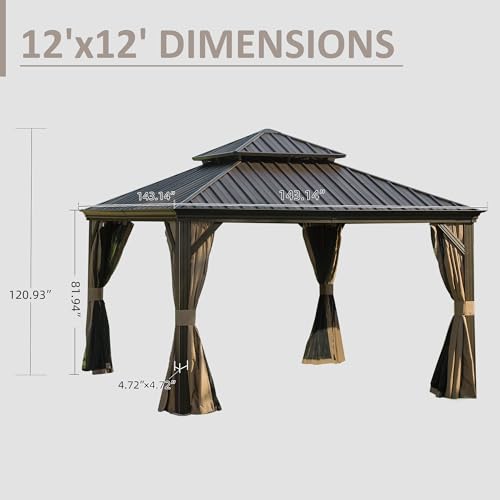
Domi 12x12 Hardtop Gazebo with Built-in Drainage


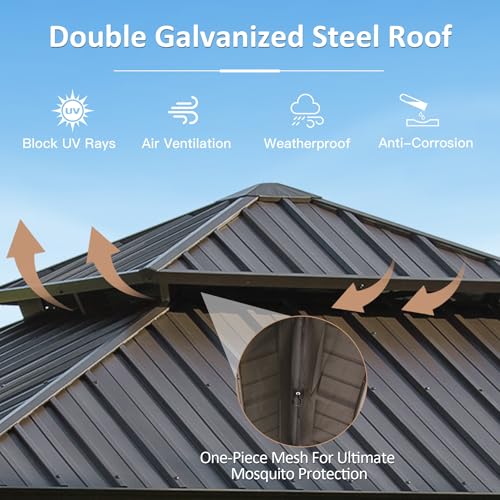
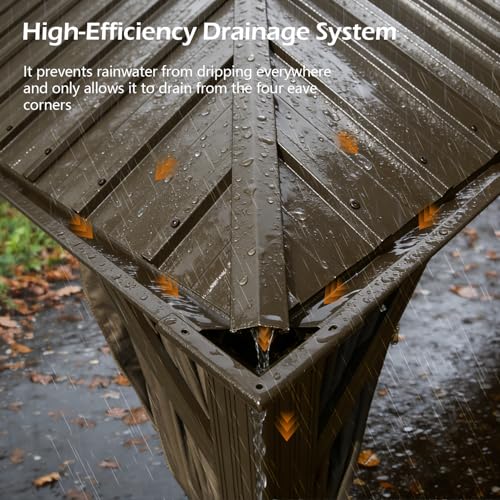
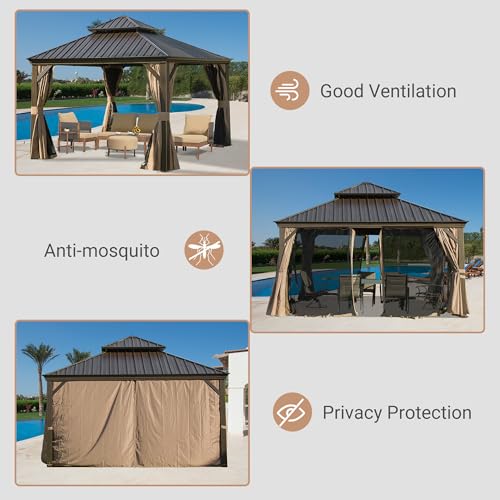
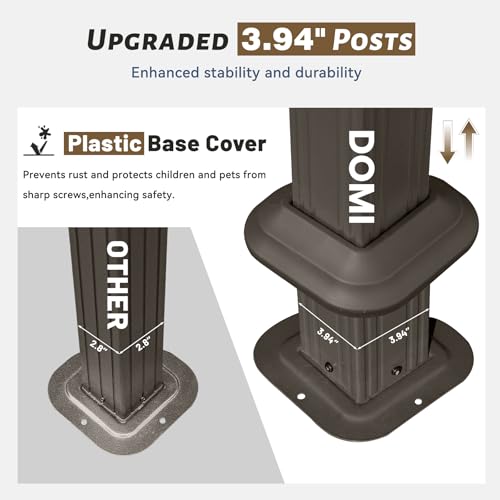
As an Amazon Associate we earn from qualifying purchases. Product prices and availability are accurate as of the date/time indicated.
Choose wall-mounted if
- You want covered space right outside a door.
- The patio is narrow and posts against the house would get in the way.
- Your wall is solid and you can fasten to it as the manual specifies.
Wall-mounted gazebos to compare:

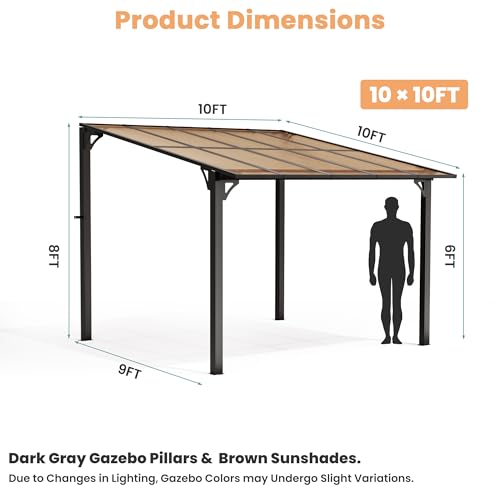
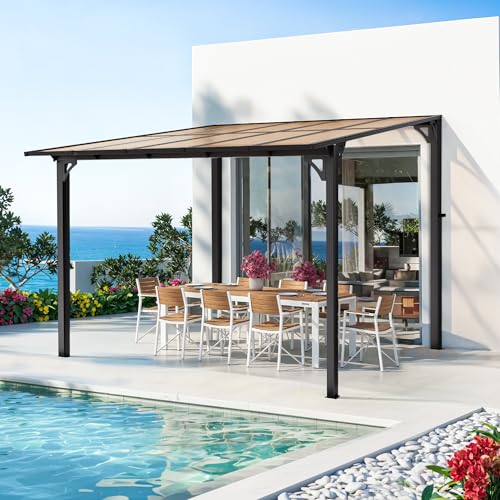
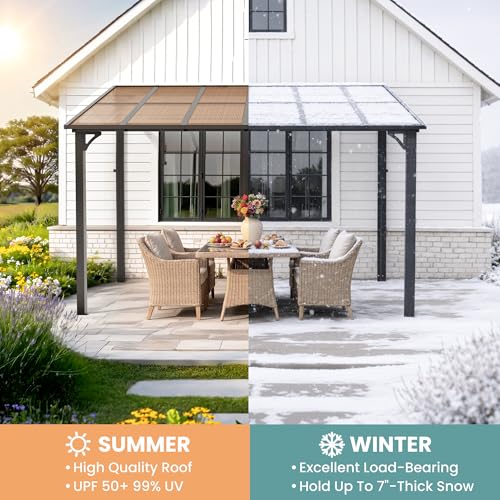
Pamapic 10x10FT Wall Mounted Gazebo Review


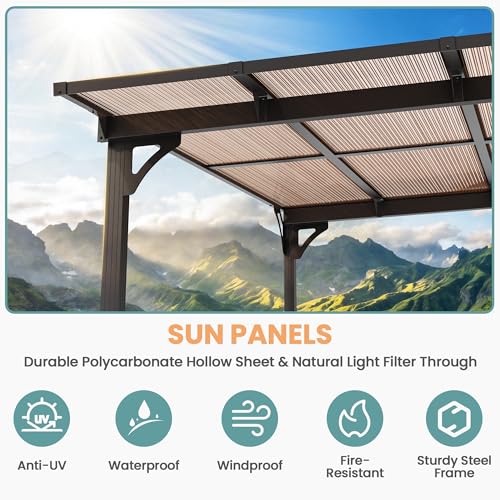
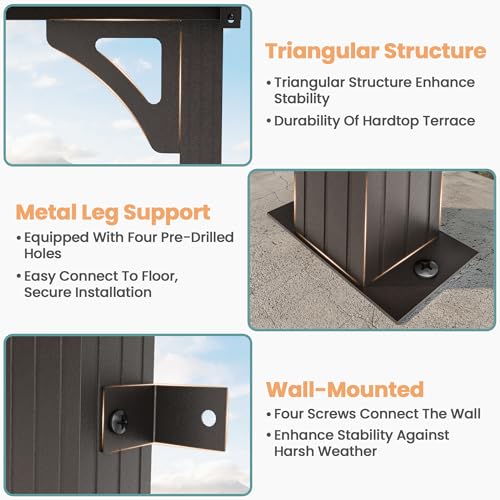
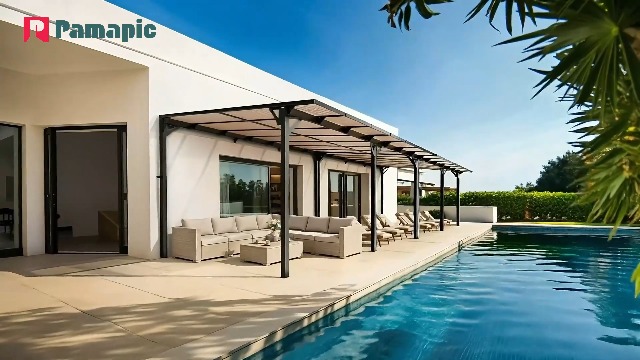
As an Amazon Associate we earn from qualifying purchases. Product prices and availability are accurate as of the date/time indicated.

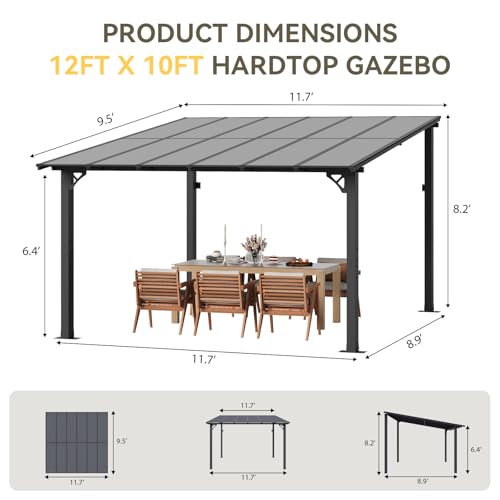
Aoxun 12'x10' Wall-Mounted Gazebo Review


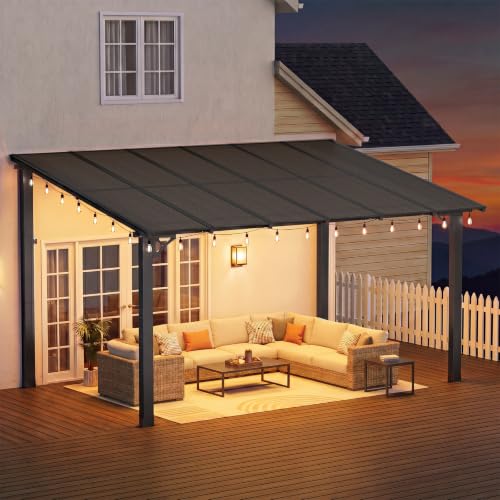
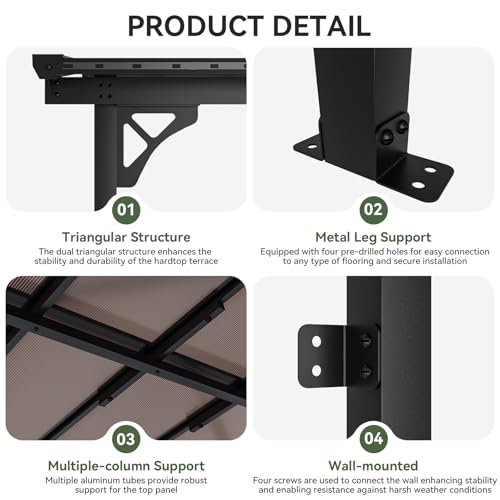
As an Amazon Associate we earn from qualifying purchases. Product prices and availability are accurate as of the date/time indicated.
Who should skip each
Skip a wall-mounted gazebo if you rent, if you are not sure your wall can carry the load, or if you cannot get the attachment checked. Skip a freestanding gazebo if you have no level open area away from the house, or if the main goal is shade right at the back door.
Next steps
Browse Best Wall-Mounted Gazebos and Best Freestanding Hardtop Gazebos. For placement ideas, see Where to Put a Gazebo.
How we put this guide together
We compared the listings in our product catalog (October 2026) on the specifications and claims each manufacturer publishes. Counts are approximate and refer to listings, so size and color variants of one model are counted separately. Wind, snow, and load figures are manufacturer claims, not our own measurements, and quotes are taken from the named listings. Our evaluations are based on manufacturer specifications and aggregated owner feedback.


Write Your Review
No reviews yet. Be the first to share your experience!