
Two gazebos with the same size and roof shape can age very differently depending on what the frame, roof, and fabric are made of. This guide explains the materials that show up most often in gazebo listings, what each one is good at, and what to watch for.
The counts below come from our catalog of 724 gazebo and canopy listings, collected in September 2026. They show what manufacturers use and claim, not measured durability.
Frame materials
Aluminum
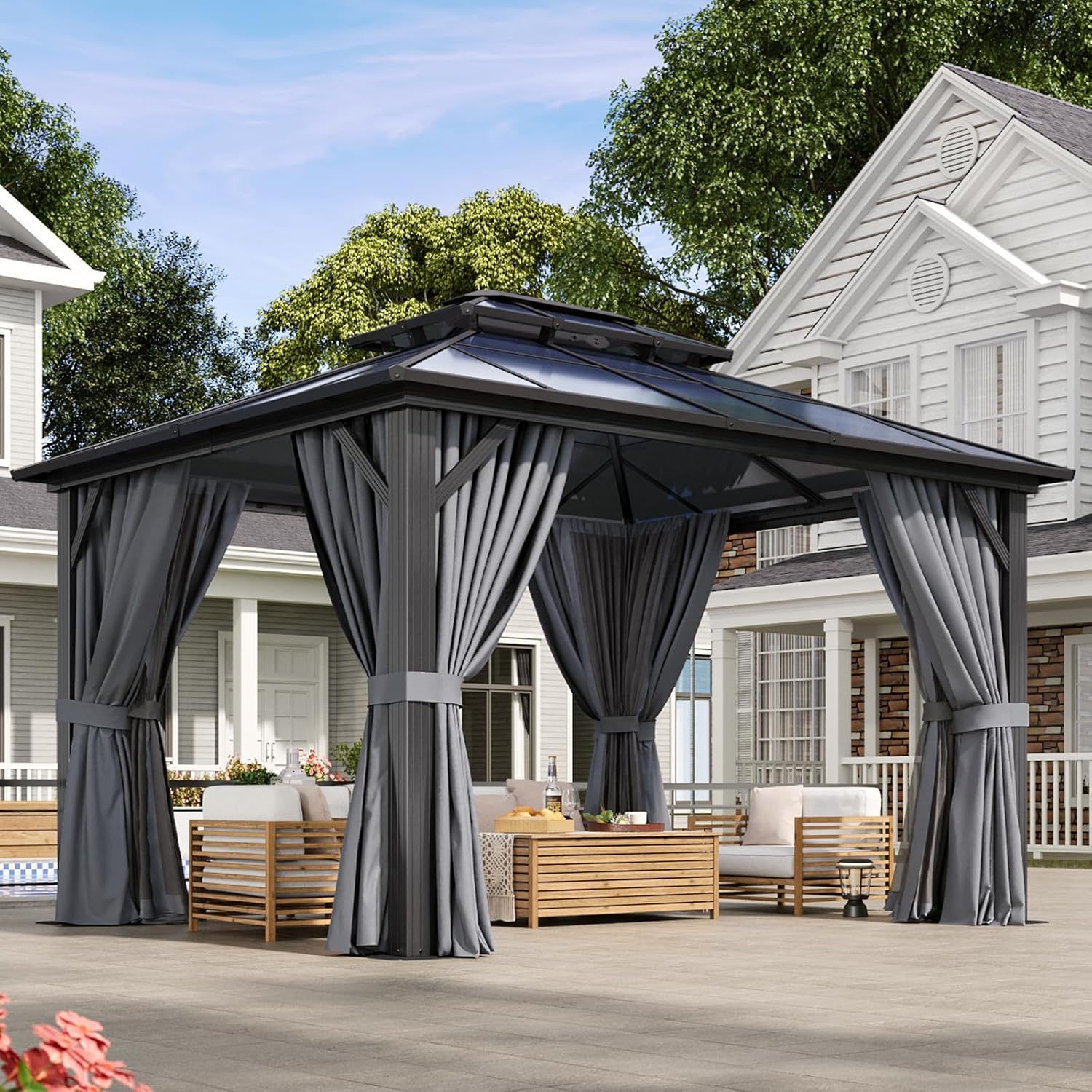
Aluminum is the most common frame material for hardtop gazebos in our catalog: about 170 hardtop listings describe an aluminum frame, compared with about 35 describing a steel or iron frame. Aluminum does not rust the way steel does, because rust is iron oxide, and it is lighter to lift during assembly. It is also usually thicker in section to make up for being less stiff than steel, which is why many hardtop listings advertise wide posts (many PURPLE LEAF hardtops, for instance, advertise a “4.7" Wide Frame” in the title).
What to watch: aluminum frames are often joined with steel screws and brackets, and those small steel parts can still rust at the joints. Powder coating protects the finish but can chip during assembly.
Steel
Steel is stiffer and cheaper than aluminum for the same strength. Soft top gazebos in our catalog lean toward steel (about 80 listings mention a steel frame versus about 20 aluminum), and every pop-up frame we could classify uses steel. Look for “powder-coated” and, ideally, “galvanized” in the description. A scratch through the coating on bare steel will rust; galvanized steel has a zinc layer underneath that slows it down.
Wood and wood-look
A growing number of listings use real wood posts, often cedar, with a metal roof. Aoxun and Jocisland both sell cedar-frame hardtops, for example. Wood looks warmer and can be stained, but it needs periodic sealing, and it behaves differently near heat sources. Many “wood grain” gazebos are aluminum with a printed wood-look finish; read the material line, not the photo. Compare both in Best Wood-Look Hardtop Gazebos.
Roof materials
Galvanized steel roof
Galvanized steel is the most common hardtop roof material in our catalog, mentioned in about 190 hardtop listings. It blocks light completely, sheds snow and rain, and is available in single and double (vented) roof designs. Downsides: it is noticeably louder in heavy rain than fabric, and a dark steel roof can radiate heat on still summer afternoons. Several sellers pair it with a double-tier vent to let hot air escape.
Polycarbonate
Polycarbonate panels appear in about 65 hardtop listings. They are translucent, so the space underneath stays bright. The main misunderstanding is heat: several sellers state it directly. YOLENY notes the polycarbonate roof “can only block UV rays, not high temperatures and strong light,” and an OiOi listing says it “blocks UV rays but does not insulate against high heat or intense glare.” If your gazebo sits in full afternoon sun and you want it noticeably cooler underneath, a solid metal roof or a shade layer will do more.
Aluminum roof
Aluminum roof panels are uncommon (only a handful of listings in our catalog). They avoid rust entirely, which matters near pools and the coast, but they are harder to find and compare. See Best Hardtop Gazebos with Aluminum Roofs.
Fabric canopy
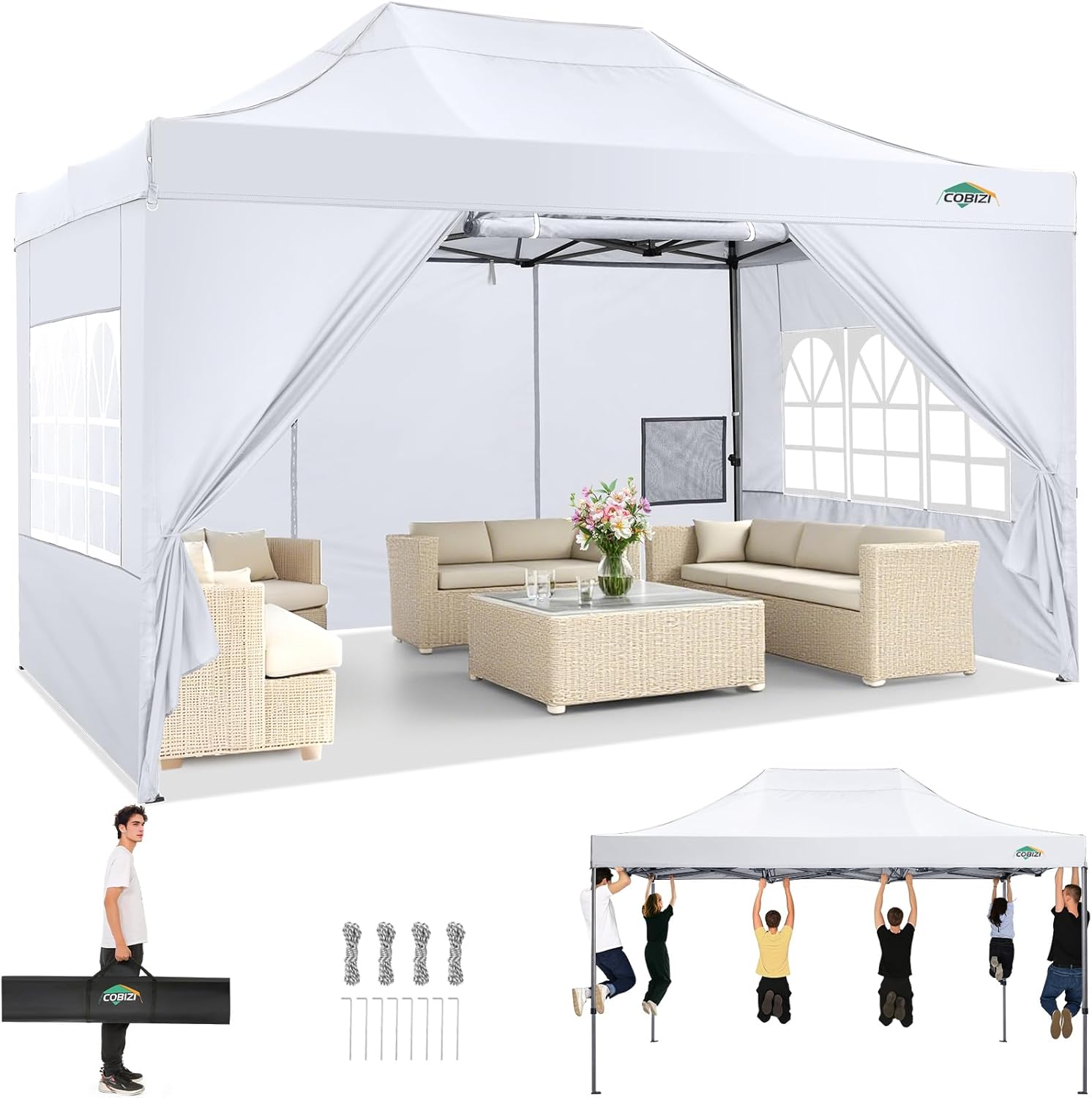
Soft top and pop-up gazebos use polyester fabric, often with a waterproof coating. Listings describe fabric weight in denier (D): higher denier generally means a thicker yarn, so a 450D Oxford top is typically heavier than a 150D one. Fabric tops fade and weaken with sun exposure and are the part most likely to need replacement. Before buying, check that a replacement canopy is sold for the exact model.
Curtains and netting
Curtains are often polyester; netting is fine mesh. If you will cook, use heaters, or run string lights near them, look for a stated flame-resistance standard. Several HOTEEL and Tooluck listings describe “CPAI-84 flame-resistant curtains,” a fabric standard commonly used for tents. A listing that just says “fire-resistant” without a standard gives you less to go on.
Materials at a glance
| Material | Strength | Weakness | Best fit |
|---|---|---|---|
| Aluminum frame | No rust, lighter to assemble | Steel fasteners can still rust | Humid, coastal, and pool areas |
| Steel frame | Stiff, lower cost | Rusts where coating chips | Budget builds, soft tops, pop-ups |
| Cedar frame | Natural look, can be refinished | Needs sealing, more upkeep | Garden settings |
| Galvanized steel roof | Full shade, sheds snow | Rain noise, heat on still days | Year-round structures |
| Polycarbonate roof | Bright underneath, blocks UV | Does not block heat or glare | Partly shaded yards, cooler climates |
| Polyester canopy | Light, replaceable | Fades, tears, seasonal | Soft tops and pop-ups |
Who should skip each option
- Skip polycarbonate if the main goal is a cooler space in full afternoon sun.
- Skip bare steel frames near saltwater or a pool with splash-out, unless the coating is galvanized and you will touch up chips.
- Skip real wood if you do not want a sealing routine every year or two.
For care routines by material, see Gazebo Care by Season. For the bigger roof-type choice, see Hardtop vs Soft Top Gazebo.
How we put this guide together
Counts come from keyword matches in the titles and descriptions of the 724 gazebo and canopy listings in our catalog (September 2026); one listing can mention more than one material. Quotes are copied from the named manufacturer listings. We have not measured material thickness or durability ourselves.





Write Your Review
No reviews yet. Be the first to share your experience!