

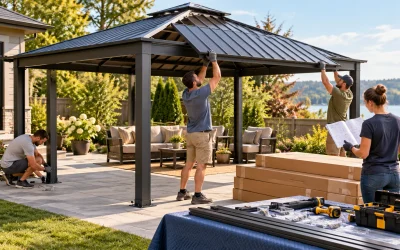
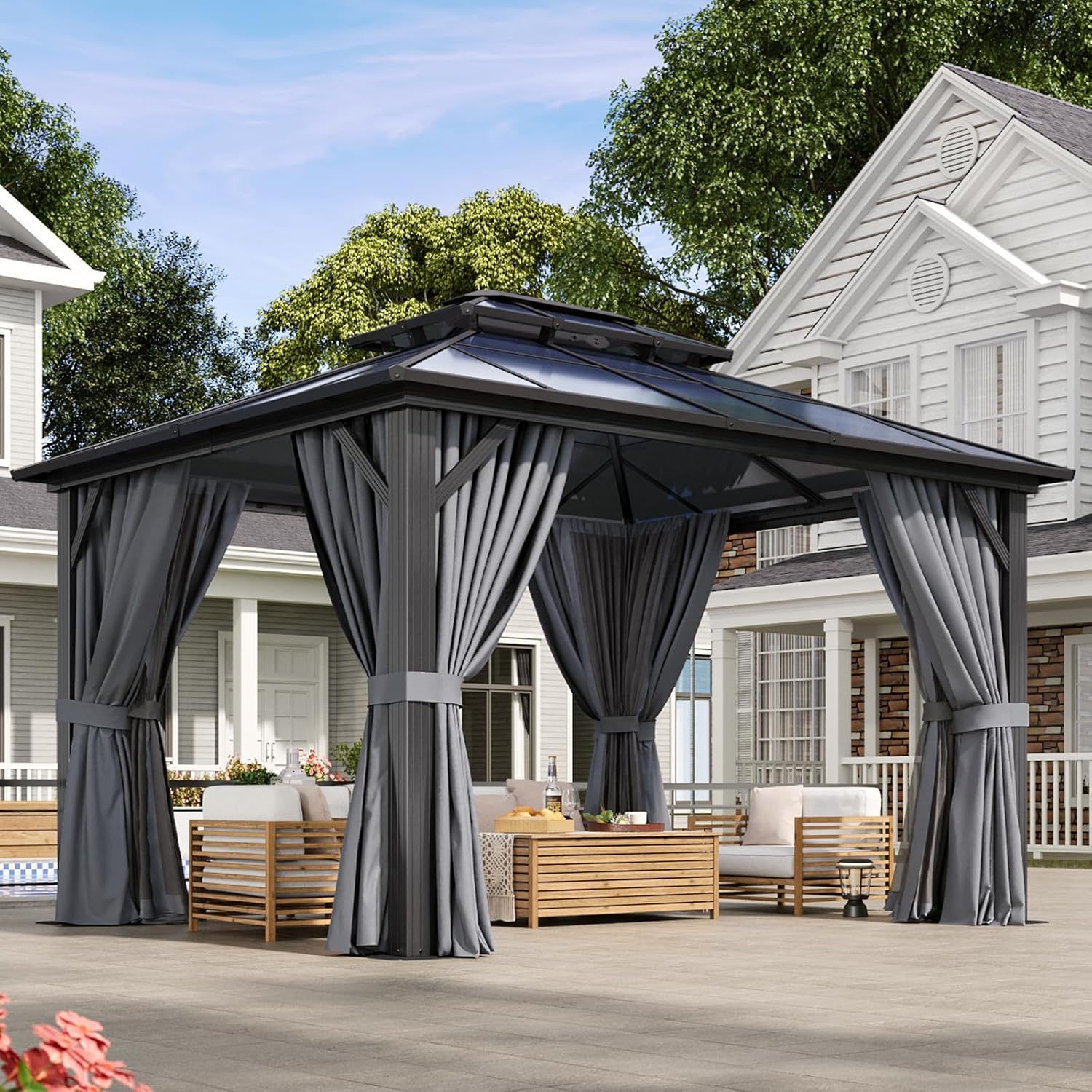
A hardtop gazebo’s roof acts like a sail. Every wind rating we have seen on a hardtop listing assumes the posts are fastened down, and some state that condition outright. This guide explains how anchoring usually works on each surface, what hardware tends to come in the box, and where to get help.
Safety first: always follow the anchoring instructions in your gazebo’s manual. If your surface or local conditions are different from what the manual describes, ask the manufacturer or a local contractor before improvising.
Why anchoring decides the weather rating
Manufacturers are clear that their wind and snow numbers depend on anchoring. Kozyard writes that “When properly anchored, the structure is engineered to handle a 2,500-lb snow load and withstand wind speeds up to 60 MPH.” Aoxun states wind resistance “after installing expansion bolts.” A Pamapic wall-mounted model recommends “mounting the gazebo to your wall and floor using heavy-duty expansion bolts.” Without anchoring, those numbers do not apply.
What usually comes in the box
In our catalog of about 300 hardtop listings (September 2026), roughly 90 mention expansion bolts and about 55 mention ground stakes. Expansion bolts are designed for concrete. Stakes are designed for soil. Few kits include what a wood deck needs, and none that we saw include concrete footings for a lawn install. Check the parts list before you pick a spot.
Concrete slab or patio
This is the surface most hardtop kits are designed for. The general process is:
- Assemble the frame fully and square it before drilling, so post bases sit where they will stay.
- Mark the holes through the pre-drilled post base plates.
- Drill with a hammer drill and masonry bit sized to the anchor, to the depth the anchor maker specifies.
- Clean dust from the holes, set the anchors, and tighten to the specified torque.
Two things to check: the slab must be thick and sound enough for the anchor (a thin, cracked patio will not hold), and anchors should not sit too close to the slab edge, where concrete can break out. Anchor makers publish minimum edge distances and embedment depths; follow them.
Wood deck
Deck boards alone are thin and can split or pull through. The post base plates need to be fastened into solid framing (joists, beams, or blocking added between joists) with structural screws or lag screws sized for the load. If the post locations do not line up with framing, add blocking under the deck. Also consider whether the deck itself was built to carry a gazebo; an older or lightly built deck may need a professional look. Compare deck-friendly models in Best Hardtop Gazebos for Decks.
Pavers
Pavers sit on sand and gravel and can lift out, so they are not a structural anchor. Common approaches are to lift the pavers at each post location and pour a concrete footing, then anchor into the footing, or to install the gazebo on a concrete pad and lay pavers around it. Either way, the anchor goes into concrete, not into a loose paver.
Lawn or soil
Stakes that come with many kits are a light hold for a hardtop. For a permanent install on soil, the more reliable options are concrete footings at each post (formed with round cardboard tubes, poured below the frost line where your local code requires it), or screw-in ground anchors rated for the load. Before digging or driving long anchors, call 811 to have utilities marked.
After it is anchored
- Check bolt tightness after the first few weeks and again each season, since frames settle.
- Retract curtains in strong wind; closed curtains act like extra sail area. HOTEEL and Tooluck listings say to “Retract the curtains and netting during strong winds.”
- Clear heavy snow from the roof. See Gazebo Snow Load Explained.
Surface summary
| Surface | Typical method | Usually in the box? |
|---|---|---|
| Concrete slab | Expansion or wedge anchors through post bases | Often |
| Wood deck | Structural or lag screws into joists or blocking | Rarely |
| Pavers | Concrete footings under posts, then anchors | No |
| Lawn or soil | Concrete footings or rated ground anchors | Stakes only, sometimes |
When to call a pro
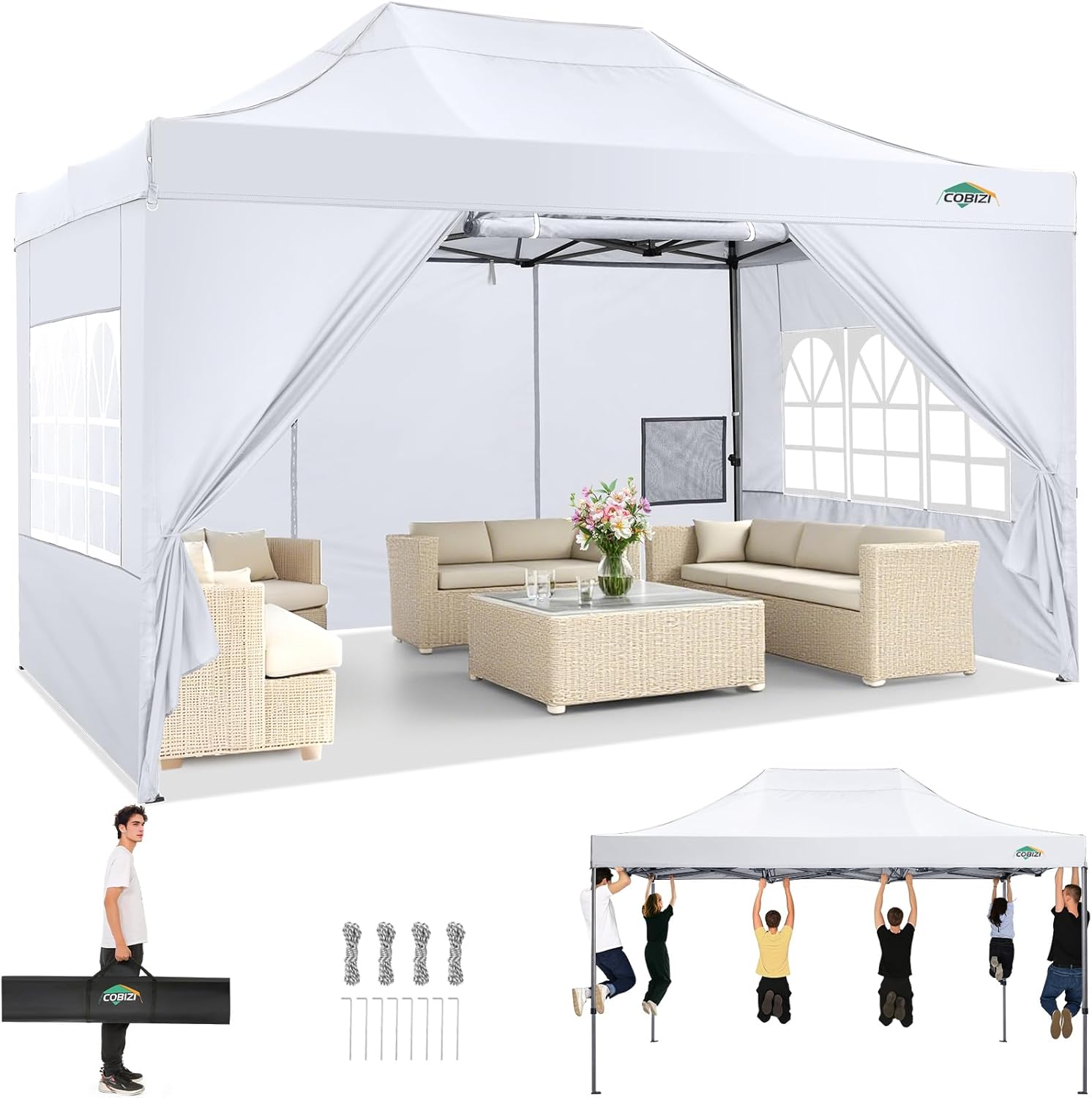
Consider a contractor if the gazebo is large (12×20 and up), if it will be attached to the house, if you are in a high-wind or heavy-snow area, or if your town requires a permit and inspection. For portable canopies, see our pop-up anchoring guide instead. For models built for windy sites, see Best Hardtop Gazebos for High Winds.
How we put this guide together
Hardware counts come from keyword matches in about 300 hardtop listings in our catalog (September 2026). Quotes are copied from the named manufacturer listings. This is general guidance, not an engineering specification; your manual and local code take priority.





Write Your Review
No reviews yet. Be the first to share your experience!