

A pop-up gazebo is light by design, which is exactly why it moves in wind. Securing it properly is not optional, and even a well-secured pop-up has a wind limit that is much lower than most people expect. This guide covers the hardware, the method on each surface, and when to take it down.
The wind limits manufacturers state
Pop-up listings in our catalog (about 250 of them, September 2026) quote far lower wind figures than hardtops. Examples, word for word:
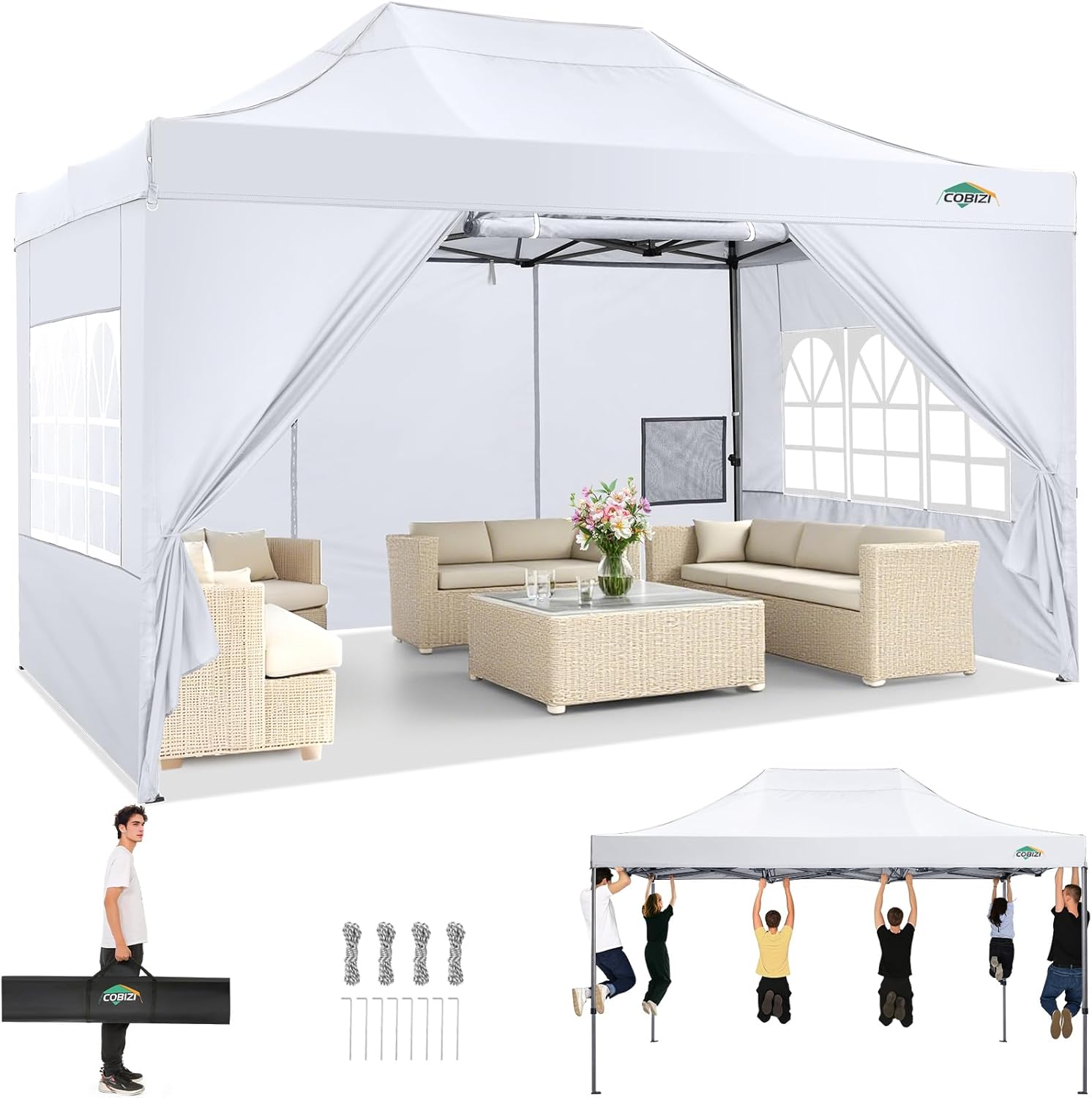
- COBIZI 12×12: “Can withstand winds up to 12 mph.”
- East Oak screen tent: “DO NOT recommend using when the wind force reaches level6 (+24 Mph).”
- Alvantor screen house: “not recommended to use when the wind force reaches 24-30.”
- COBIZI 12×20 and 16×16: stability “in winds up to 25 mph.”
- CROWN SHADES: canopies “will blow away or collapse in heavy wind or rain.”
Across the pop-up listings that give a number, most fall between 12 and 25 mph. For comparison, hardtop listings commonly quote 38 to 60 mph. A pop-up is a fair-weather shelter; plan around that.
What usually comes in the box
Most pop-up kits include some mix of stakes, ropes (guy lines), and fillable weight bags. In our catalog, about 150 pop-up listings mention stakes, about 120 mention ropes, and about 105 mention sandbags or weight bags. A typical kit, for example, lists “8 stakes, 4 sandbags and 4 ropes” (COBIZI). Kit stakes and bags are often light-duty; many owners upgrade them.
On grass or soil
- Open the frame fully and lock every leg at the same height.
- Drive a stake through each foot plate, angled slightly away from the canopy.
- Attach guy lines from the upper corners of the frame to stakes placed out from each leg, angled outward, and tension them evenly.
- Add weights at each leg if you expect gusts. Stakes can pull out of soft or wet ground.
On pavement, a deck, or a driveway
Stakes are useless on hard surfaces, so weight is the only hold. Fill the included bags fully and strap them tight to the bottom of each leg. For more hold, use purpose-made canopy weights. Many farmers markets and craft fairs set a minimum weight per leg in their vendor rules, so check the event’s rules if you are a vendor. See Best Pop-Up Gazebos for Vendors.
On sand
Regular stakes pull out of dry sand. Use wide sand stakes or buried anchors, and fill weight bags with sand on site. Beach days are often windy by afternoon, so plan to take the canopy down early. See Best Pop-Up Gazebos for Beaches.
Sidewalls change everything
Sidewalls and privacy panels turn a canopy into a box that catches wind. Roll them up or remove them when the wind picks up. Some models add vents to help: CROWN SHADES describes “Air vents + secure clip design” to “reduce wind lift, rain pooling, and fabric tears.” Vents help at the margin; they do not make a pop-up storm-proof.
Rain is a hazard too
Water pooling on a flat canopy can bend a frame. Lower one leg a notch so the roof sheds water, and push pooled water off from underneath with a broom handle. If heavy rain is forecast, take it down.
When to take it down
- When the wind approaches the limit in your manual, or as soon as gusts start moving the frame.
- Before thunderstorms. GAFETE’s advice is to “promptly store the gazebo” in “strong winds, heavy rain, or other severe weather.”
- Overnight at events and campsites if you cannot watch it.
Quick reference
| Surface | Primary hold | Backup |
|---|---|---|
| Grass or soil | Stakes through foot plates | Guy lines plus weights |
| Pavement or deck | Weights on every leg | More weight; no stakes |
| Sand | Sand stakes or buried anchors | Sand-filled bags |
If you want shade that can stay up in real wind, a pop-up is the wrong tool; see Pop-Up Canopy vs Gazebo. If you are staying with a pop-up, compare wind-oriented designs in Best Pop-Up Gazebos for Wind.
How we put this guide together
Wind limits and hardware counts come from about 250 pop-up listings in our catalog of 724 gazebo and canopy products (September 2026). Quotes are copied from the named listings. Always follow the manual for your model.





Write Your Review
No reviews yet. Be the first to share your experience!