
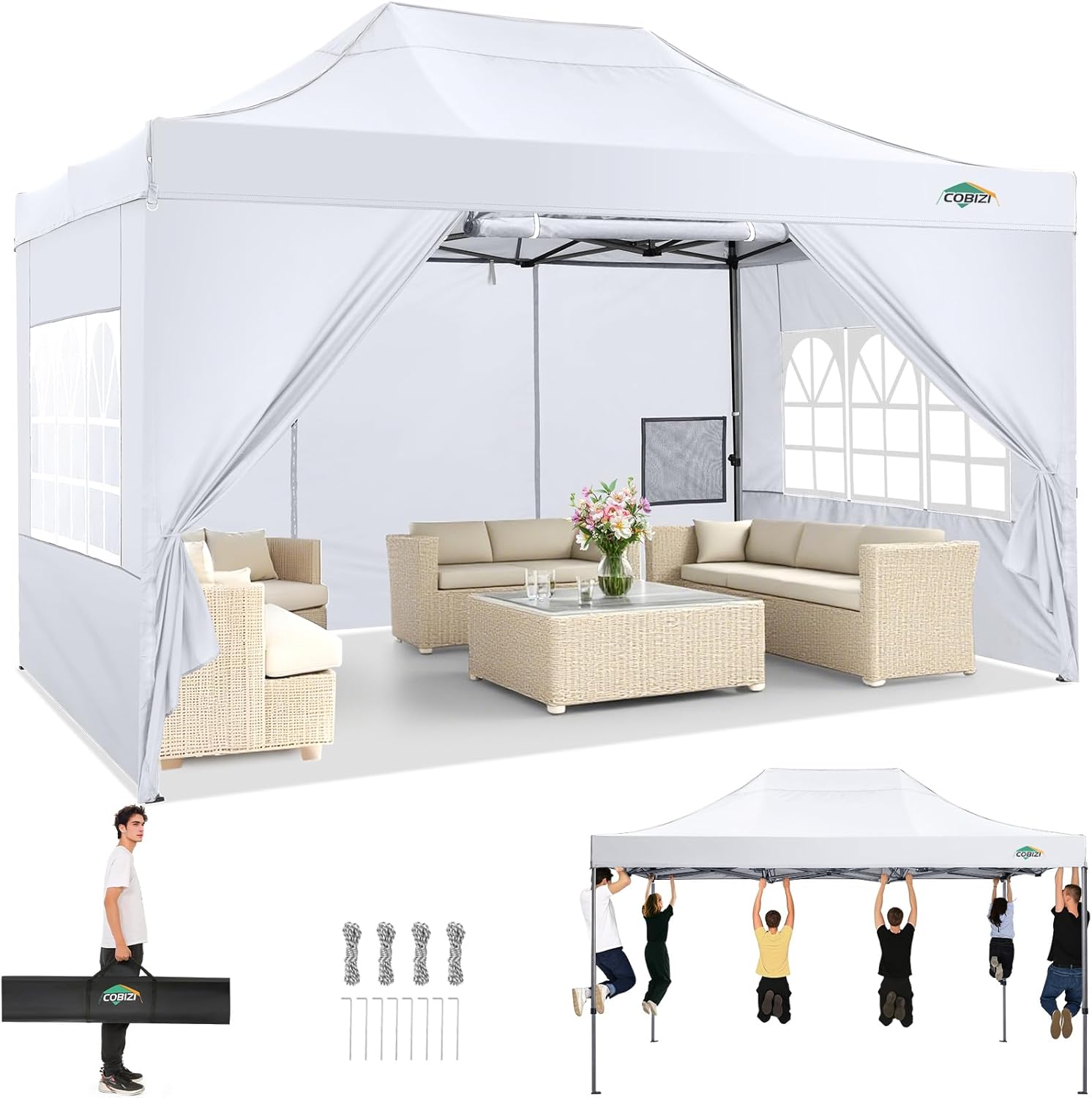
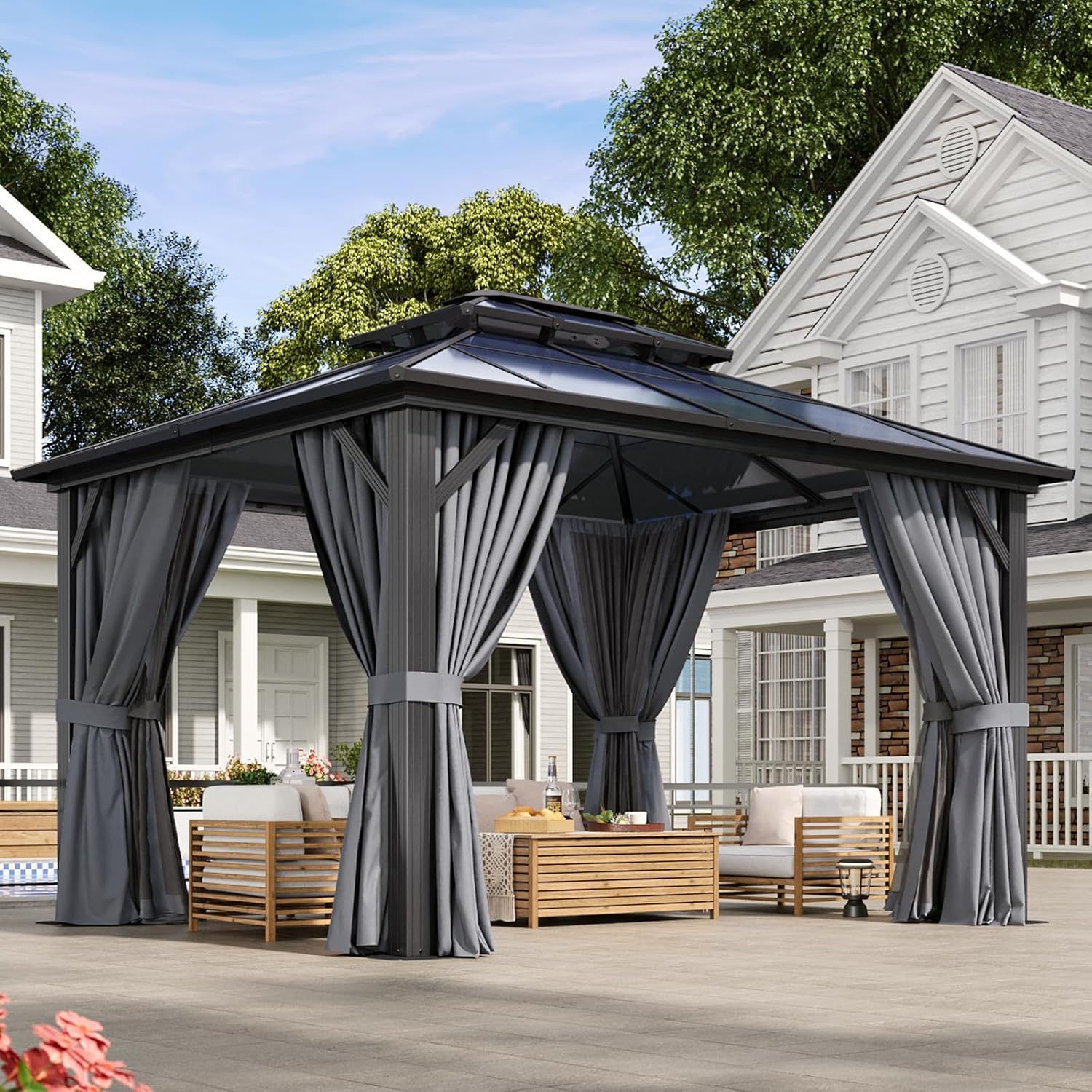
The biggest decision in buying a gazebo is the roof. A hardtop has a rigid metal or polycarbonate roof and is meant to stay up year-round. A soft top has a fabric canopy over a metal frame and is usually treated as a seasonal structure. Here is how they compare in practice.
At a glance
| Factor | Hardtop gazebo | Soft top gazebo |
|---|---|---|
| Roof | Galvanized steel, aluminum, or polycarbonate | Polyester fabric canopy |
| Frame | Mostly aluminum in our catalog | Mostly steel in our catalog |
| Year-round use | Designed for it, with snow clearing | Canopy usually removed for winter |
| Snow | Many listings state a snow rating | Not suitable |
| Typical wind claims | Commonly 38 to 60 mph, anchored | Stated far less often (about 18 listings) |
| Rain noise | Louder, especially steel | Quiet |
| Assembly | Heavy; often 2 to 4 adults, several hours | Lighter and faster |
| Long-term parts | Panels rarely need replacing | Canopy wears out and gets replaced |
| Upfront cost | Higher | Lower |
Weather: the main difference
A hardtop is built to stay up through all seasons. About 45 hardtop listings in our catalog (September 2026) include a snow figure, and about 135 state a wind speed, commonly between 38 and 60 mph when fully anchored. Soft top listings rarely claim snow capacity, and fabric is not designed to hold snow. If you want to leave the structure alone through winter, a hardtop is the practical choice. See Gazebo Snow Load Explained and Gazebo Wind Ratings Explained.
Heat and light underneath
This is where soft tops sometimes win. Fabric canopies breathe, and many use a vented double tier. Solid steel roofs block all light but can radiate heat on still days; polycarbonate lets light in but, as sellers such as YOLENY and OiOi state, does not block heat or strong light. If the gazebo will sit in full summer sun, see Best Soft Top Gazebos for Hot Weather and Best Hardtop Gazebos for Sun Protection.
Frames and durability
Among hardtop listings that name a frame material, aluminum outnumbers steel by roughly five to one. Soft tops lean the other way, with steel frames outnumbering aluminum by roughly four to one. Aluminum does not rust; steel does where its coating chips. More in Gazebo Materials Explained.
Cost of ownership
Soft tops cost less to buy, but the canopy is a wear part. Sun and weather break down fabric, so budget for replacement canopies over the years, and check that one is sold for your exact model before you buy. Hardtops cost more upfront, and anchoring may add cost (hardware, footings, or paid assembly), but the roof itself rarely needs replacing.
Assembly and flexibility
Hardtops are heavy kits. Manufacturer estimates in our catalog run from 2 to 5 people and several hours. Soft tops are lighter and easier to move to a new spot. If you rent, might move, or want to rearrange your yard each season, a soft top is easier to live with. See Hardtop Gazebo Assembly: What to Expect.
Choose a hardtop if
- You want a structure that stays up year-round.
- You get snow or regular strong wind and can anchor into concrete or footings.
- You want to cover an outdoor kitchen, hot tub, or permanent furniture.
Choose a soft top if
- You mostly use the space in warm months.
- You want a lower upfront price and easier assembly.
- You prefer a quieter, more breathable roof.
Who should skip each
Skip a hardtop if you cannot anchor it properly, since its weather ratings depend on it, or if you are likely to move soon. Skip a soft top if you will not take the canopy down before winter, or if the spot gets strong wind regularly.
Next steps
Compare the top models of each type: Best Hardtop Gazebos and Best Soft Top Gazebos. Considering something portable instead? See Pop-Up Canopy vs Gazebo.
How we put this guide together
Counts come from keyword matches in the 724 gazebo and canopy listings in our catalog (September 2026). Figures are manufacturer claims, not our own measurements. Quotes are copied from the named listings.




Write Your Review
No reviews yet. Be the first to share your experience!