

Most gazebo regret comes from one of three mistakes: buying a roof type that does not match the climate, buying a size that looks right online but crowds the furniture, or buying a structure that the yard cannot anchor properly. This guide walks through the eight questions we use to narrow a gazebo shortlist, in the order that rules products out fastest.
We built it from the manufacturer listings in our catalog of 724 gazebo and canopy products (collected in September 2026) and from the product manuals and warnings those sellers publish. We have not set up these gazebos ourselves, so where a number appears below, it is the manufacturer’s claim, and we say so.
1. Will it stay up all year, or come down between uses?
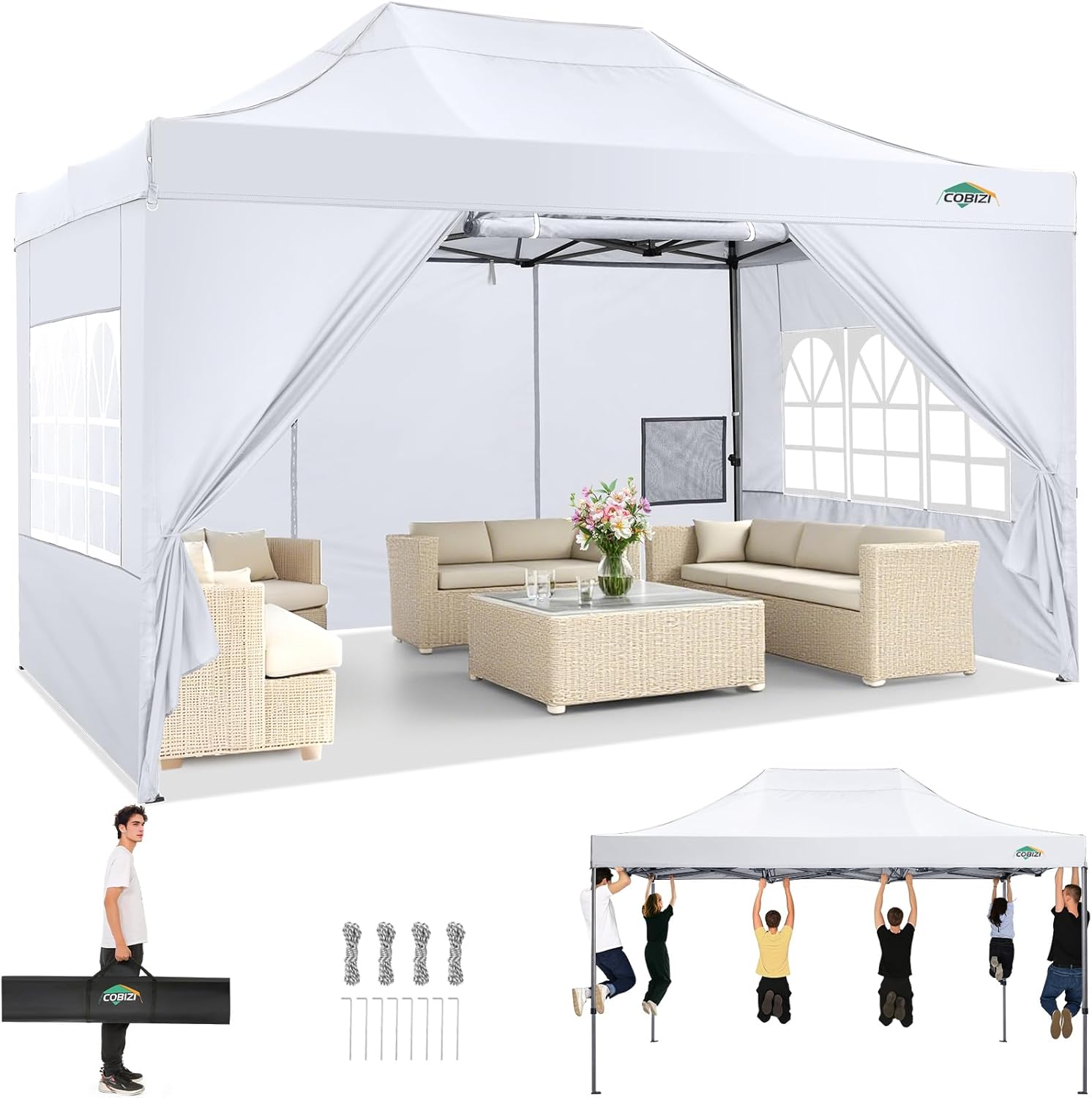
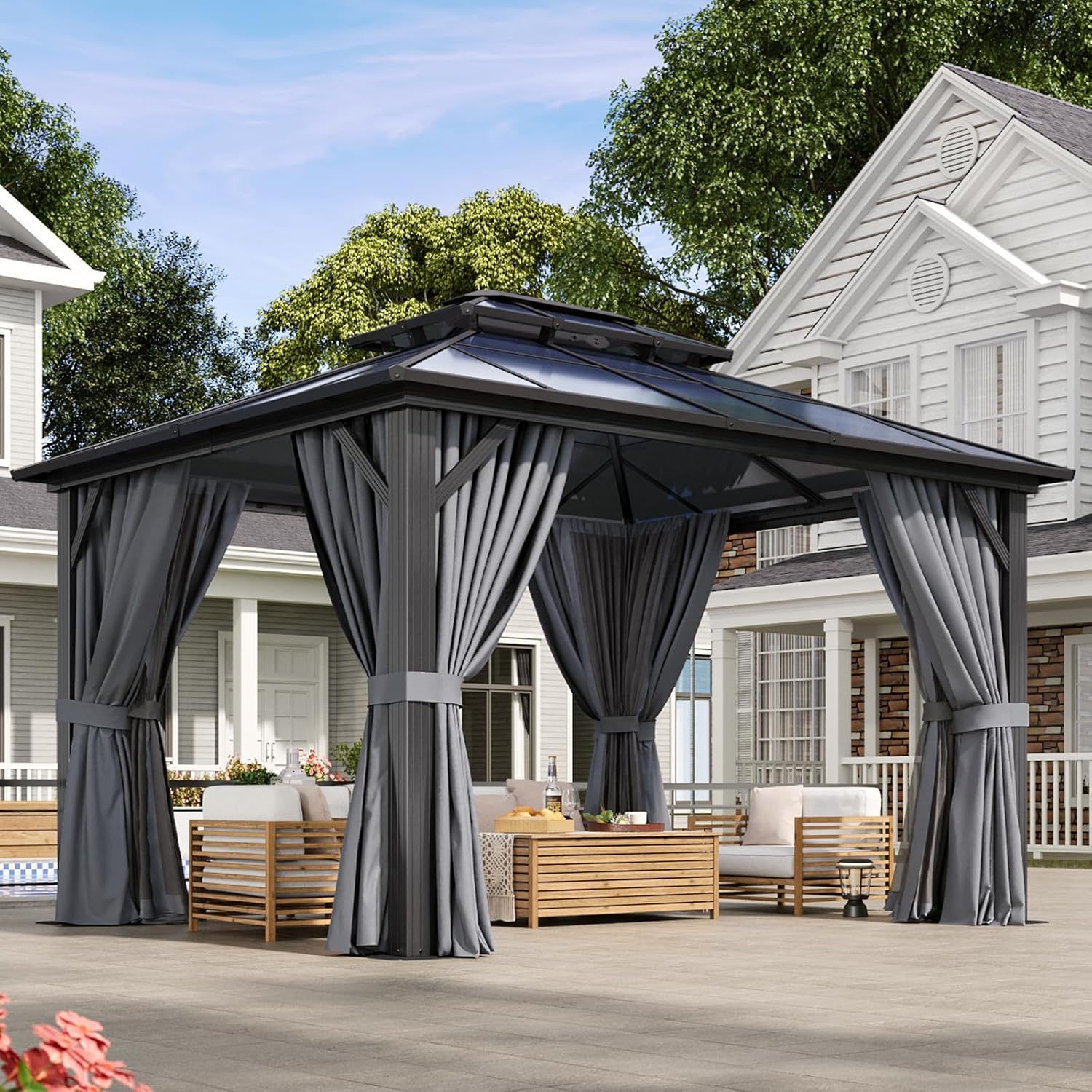
This single answer decides most of the rest. A hardtop gazebo (metal or polycarbonate roof on a metal or wood frame) is built to stay in place for years and is usually bolted down. A soft top gazebo has a permanent frame with a fabric canopy that you typically remove before winter. A pop-up gazebo or canopy folds into a bag and is meant to go up for an afternoon or an event.
In our catalog, roughly 300 listings are hardtops, about 155 are soft tops, and about 250 are pop-ups. The pop-up listings are also the ones most likely to carry blunt warnings about weather. One CROWN SHADES listing states plainly that canopies “will blow away or collapse in heavy wind or rain” if not secured and taken down in time. If you want shade that you can leave alone, a pop-up is the wrong category, regardless of price.
For a side-by-side look at the first two types, see Hardtop vs Soft Top Gazebo, and for the portable option, Pop-Up Canopy vs Gazebo.
2. What surface will it sit on?
Concrete, a wood deck, pavers, and lawn each call for different anchoring hardware. Many hardtop listings ship with concrete expansion bolts and assume a solid slab; lawn installs often need footings or ground anchors that are not in the box. Before you shortlist anything, confirm the included hardware matches your surface, or budget for what is missing. Our hardtop anchoring guide covers each surface.
3. How much space do you really have?
Measure the open area, then subtract room for walking around the structure, for roof overhang, and for any setback your town or HOA requires. A 10×12 gazebo needs more than a 10×12 patch of ground once you account for access and drainage. Our size guide works through seating layouts, and Where to Put a Gazebo covers placement and permits.
4. What weather does it need to handle?
Write down the realistic worst case for your yard: typical gusts, whether you get snow that sits on roofs, and how much direct afternoon sun the spot gets. Then read each listing’s weather claims carefully. Wind and snow figures on gazebo listings are stated in inconsistent ways, often only apply after full anchoring, and are not independently verified. We explain how to read them in Gazebo Wind Ratings Explained and Gazebo Snow Load Explained.
5. Aluminum or steel frame, metal or polycarbonate roof?
Among hardtop listings in our catalog that name a frame material, aluminum frames outnumber steel frames by about five to one. For roofs, galvanized steel is the most common material we found (about 190 hardtop listings mention it), followed by polycarbonate (about 65). Each has a real tradeoff: polycarbonate lets light through, but several sellers note, as YOLENY does, that the roof “can only block UV rays, not high temperatures and strong light.” Steel roofs shade more but can be louder in rain. See Gazebo Materials Explained for the full breakdown.
6. Who is going to assemble it?
Hardtop gazebos arrive as a large kit. Manufacturer estimates in our catalog commonly call for 2 to 4 adults and several hours; Kingdura, for example, recommends “3-4 adults” and says assembly “generally takes 2 to 4 hours,” while a SOLUMIA listing says “2-4 people in 4-5 hours.” Treat these as best-case numbers. If you do not have helpers, a ladder, and a free weekend day, factor in paid assembly. More in Hardtop Gazebo Assembly: What to Expect.
7. Do you need curtains, netting, or a grill zone?
About 300 listings in our catalog mention screens, netting, or mosquito protection in the title, so this is easy to find. What varies is quality: look for dual curtain tracks (netting and privacy panels that slide independently) and for curtain fabric that states a flame-resistance standard such as CPAI-84 if you plan to cook or use heaters nearby. If a grill is going under the roof, read the grill’s own manual first; its required clearances overrule anything a gazebo listing says.
8. What happens when a part fails?
Canopies tear, polycarbonate panels crack, and brackets bend. Before buying, check whether the seller offers replacement canopies or panels and how long the warranty is. A structure with an available replacement top can outlast two or three canopies; one without it may be scrap after a single bad storm.
Who should not buy a gazebo yet
- Renters or anyone likely to move within a year: a bolted hardtop takes most of a day to take apart, and anchor holes stay behind in the slab or deck.
- Anyone in a spot with frequent strong gusts and no way to anchor into concrete or footings.
- Homeowners who have not checked HOA rules. Several PURPLE LEAF listings include the disclaimer “Check HOA guidelines and local building codes before purchasing.”
Quick decision table
| If you need | Start with | Where to compare |
|---|---|---|
| Permanent shade that stays up year-round | Hardtop gazebo | Best Hardtop Gazebos |
| A lighter, lower-cost seasonal structure | Soft top gazebo | Best Soft Top Gazebos |
| Shade for events, markets, or camping | Pop-up gazebo | Best Pop-Up Gazebos |
| A windy yard | Anchored hardtop | Best Hardtop Gazebos for Wind |
| A covered grill station | Grill gazebo or hardtop | Best Hardtop Gazebos for Grills |
How we put this guide together
The counts in this guide come from our own catalog of 724 Amazon gazebo and canopy listings as collected in September 2026, grouped by keywords in each listing title and description. They describe what sellers claim, not measured performance. Quotes are taken word for word from the manufacturer listings named. We update this guide when the catalog changes materially.





Write Your Review
No reviews yet. Be the first to share your experience!